
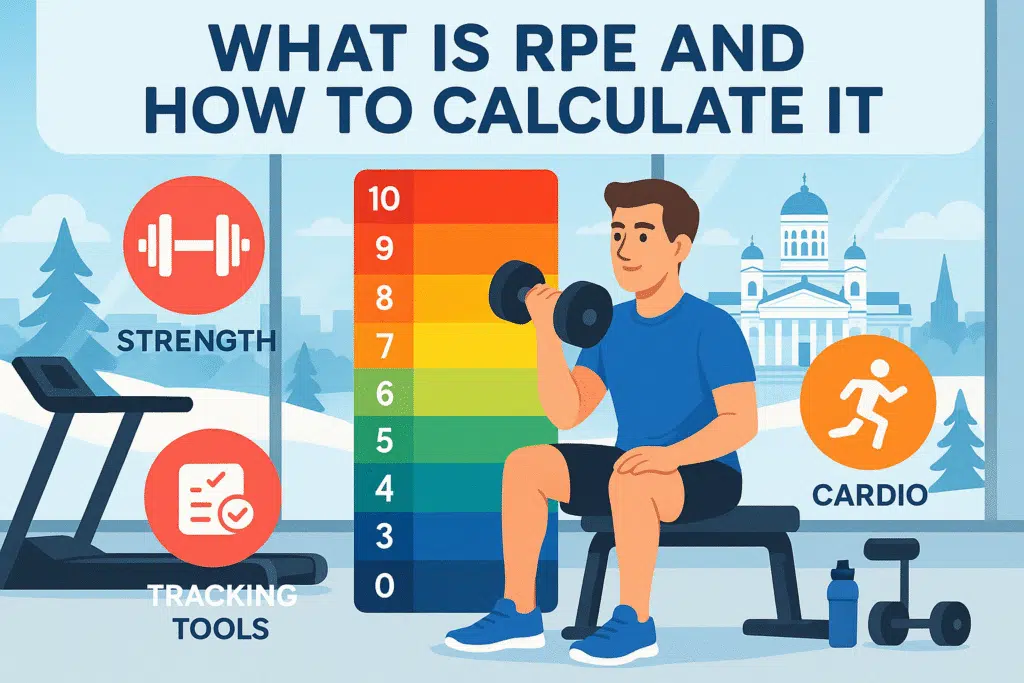
Intensity measures using manuals. The perceived exertion (RPE) is a simple and effective measure in the case of working out. RPE can transform you into a smarter athlete, less prone to injuries, and reach your fitness goals faster whether or are an amateur or professional athlete in Finland.
This guide explains what RPE is, why it matters for expats, and exactly how to calculate it, with practical examples, charts, and tools to make your workouts more effective.
What is RPE?
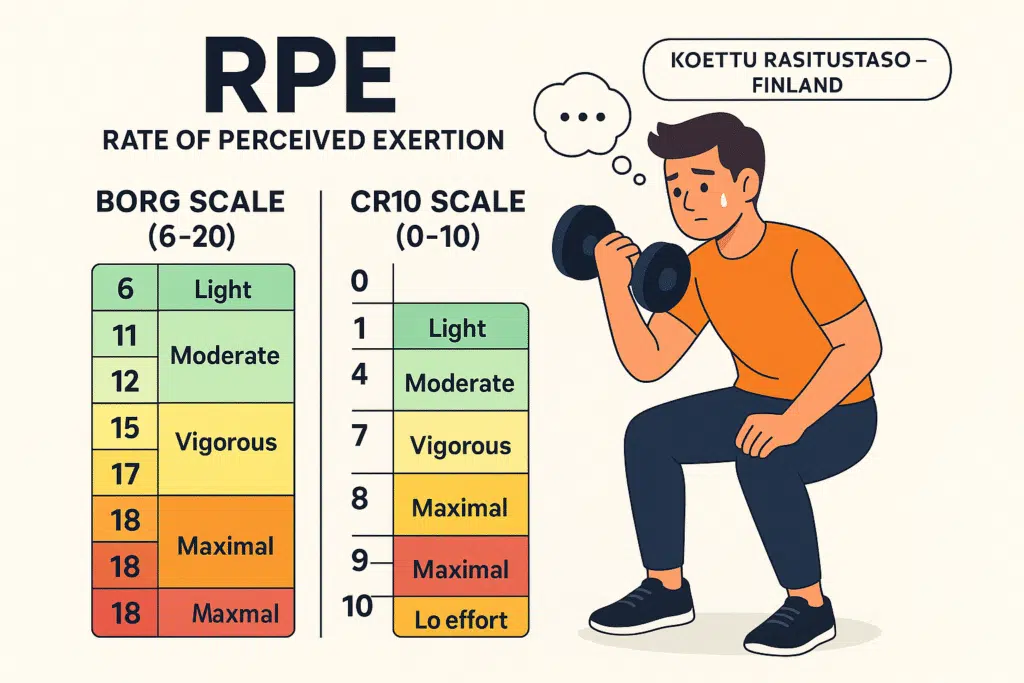
RPE is an abbreviation (Rate of Perceived Exertion), which is a scale of perceived exertion or how hard (perceived to be) your body is working when you are doing some physical work.
- Origins: The original Borg Scale was created by a Swedish physiologist, Gunnar Borg, and had a range of 6 to 20, which was based on the rate of perceived exertion in relation to heart rate.
- Contemporary Form: CR10 Scale is operated on a 0-10 scale, which is less complicated to monitor by athletes.
- Purpose: RPE will enable you to estimate the effort without using only such devices as heart rate monitors.
Finland Tip: RPE is also known as Koettu Rasitustaso in Finnish, so it should be found on domestically available resources on fitness.
Why RPE Matters in Training
Using RPE correctly can help you:
- Prevent Overtraining – Avoid injuries by listening to your body.
- Optimize Performance – Adjust workout intensity according to your goals.
- Track Progress – Monitor your improvement over time without expensive equipment.
- Personalize Workouts – Every individual’s fitness level is different; RPE makes your training tailored.
How to Calculate RPE
Calculating RPE is straightforward once you understand the scale. Here’s a step-by-step guide:
Step 1: the RPE Scale
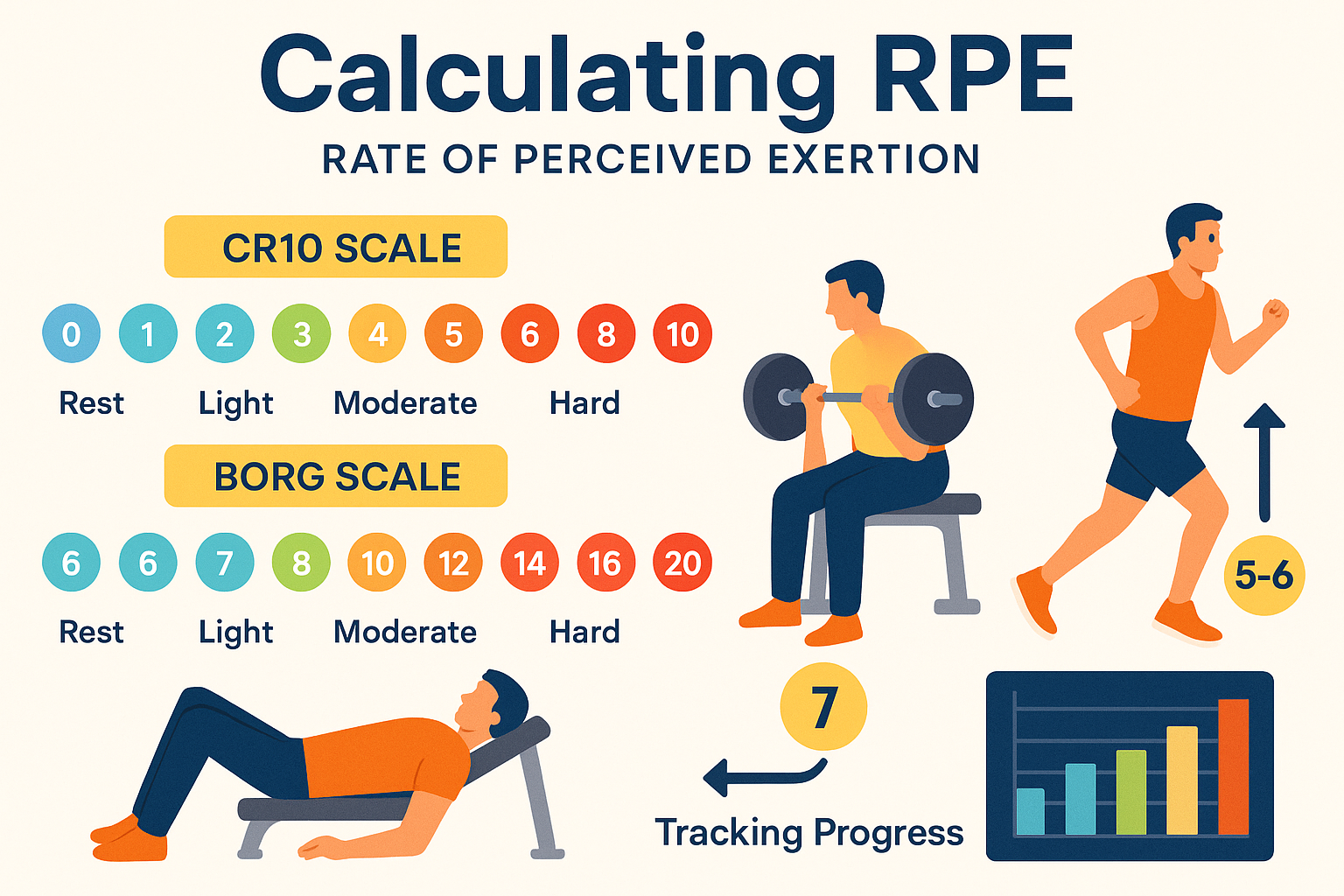
- 0–10 scale (CR10):
- 0 = Rest
- 3 = Light effort
- 5 = Moderate effort
- 7 = Hard effort
- 10 = Maximal effort
- 6–20 scale (Borg):
- Multiply RPE by 10 to estimate heart rate. For example, RPE 13 ≈ 130 bpm.
Step 2: Rate Your Effort
- During exercise, ask yourself: “How hard am I working?”
- Assign a number on the RPE scale based on perceived exertion.
Step 3: Use RPE in Your Training
- Strength Training Example:
- Bench press at 70% of max → RPE 7 (hard but manageable).
- Cardio Example:
- Exercising with a pace that allows speaking but makes a bit of effort – RPE 5-6.
Step 4: Track Progress
- Log RPE after each workout.
- Adjust intensity based on weekly trends.
Step 5: Use Tools for Accuracy
For precise calculation, you can try the RPE Calculator for Finland here: settelix.com/rpe-calculator-finland/
It is a device that allows you to ascertain your RPE in a few seconds, depending on the number of reps, sets, or the intensity of a cardio workout.
RPE Charts and Tables
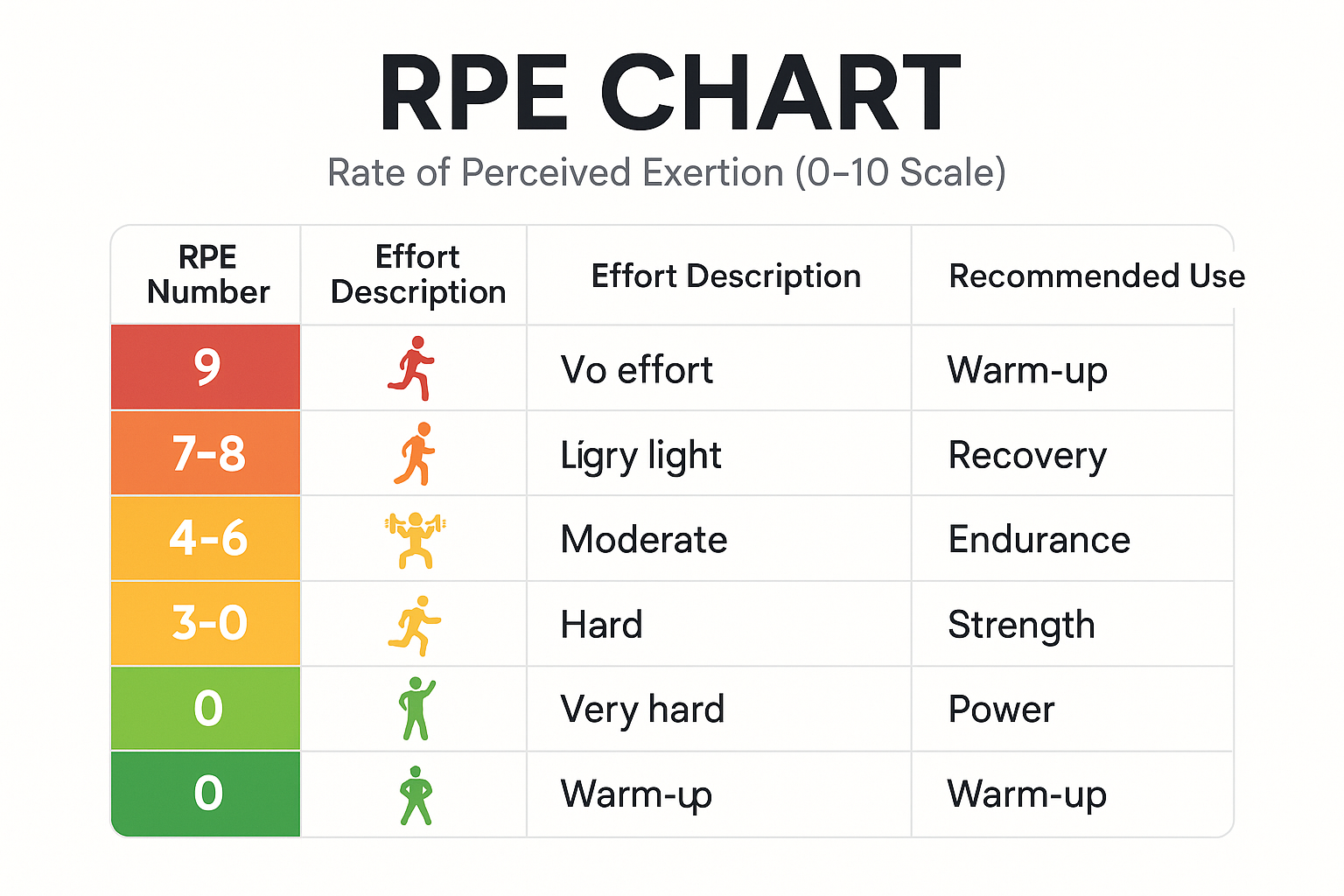
| RPE (0–10) | Effort Description | Recommended For |
|---|---|---|
| 0 | Rest | Recovery |
| 1–2 | Very light | Warm-up / Cool-down |
| 3–4 | Light | Beginners / Easy Cardio |
| 5–6 | Moderate | Fat loss / Endurance |
| 7–8 | Hard | Strength / High-intensity workouts |
| 9 | Very hard | Maximum effort / Advanced training |
| 10 | Max effort | Short sprints / Peak exertion |
Tips to Use RPE Effectively
- Warm up gradually: It takes beginners too long to estimate intensity.
- Combine with heart rate: Check if your perceived effort matches your actual heart rate.
- Modify exercise: Vary the intensity of training with RPE to ensure that the training does not injure.
- Use apps: Some Finnish fitness apps integrate RPE tracking for smarter workouts.
Read more: How to Calculate Austria Salary
Common Mistakes When Using RPE
- Ignoring Recovery – Even a correct RPE workout can lead to fatigue without rest.
- Extrapolating the Effort – First-time learners believe that moderate effort is the maximum.
- Using Only RPE – Combine it with other metrics like heart rate and performance logs.
Frequently Asked Question
Q1: Can RPE replace heart rate monitoring?
Yes, at least with the experienced athletes, but with beginners, it is better to combine both to improve accuracy.
Q2: What RPE is ideal for fat loss?
The moderate exercise (RPE 5-6) is ideal for losing some fat, and it has the balance between intensity and maintainability.
Q3: How do beginners use RPE?
The first step here is to grade the intensity of effort in easy exercises and then proceed to grade the effort in structured exercises.
Q4: Is there an RPE calculator I can use?
Yes! You can try this RPE Calculator for Finland: settelix.com/rpe-calculator-finland/
Read more: What FFMI Reveals About Your Muscle Health and True Fitness
Final Words
RPE is a universal, simple, and convenient tool to observe the intensity of the workout. It is a safer way of training, and you can be taught to utilize your body signs, charts, and even a calculator to achieve your fitness goals.
Take action today: Start tracking your RPE in your next workout, and use this RPE Calculator for Finland to make it easier and more accurate.